
You've done it. You've purchased a piece of Costa Rica, a tract of land rich in biodiversity, connected to forest corridors, full of potential. The deed is signed, the keys are yours.
Now what? This is the question every first-time conservation landowner asks and too few people answer clearly. Buying land for conservation in Costa Rica is a powerful act, but the real work begins after the purchase. The good news: every action you take compounds. A fence removed today becomes a corridor used tomorrow. A tree planted this season becomes a canopy in five years. The more intentional your first twelve months, the greater your land's ecological impact and the faster it gets there.
Costa Rica holds roughly 6% of the world's biodiversity in just 0.03% of Earth's land area. Private landowners now play a critical role in that story: with more than 25% of the country's territory formally protected, the next frontier of conservation is in private hands, yours. This guide gives you the concrete, actionable steps to take once the paperwork is done.
What should you do first after buying conservation land in Costa Rica?
Quick Answer:
1. Remove fences and barbed wire to restore wildlife movement
2. Deploy a camera trap network to baseline your biodiversity
3. Reforest degraded pasture areas with native species
4. Hire a local ranger to manage, monitor and protect the land
5. Register for Costa Rica's Payment for Environmental Services (PES) program
6. Consider formal registration as a private nature reserve with SINAC
1. Remove the fences: Open the land to wildlife
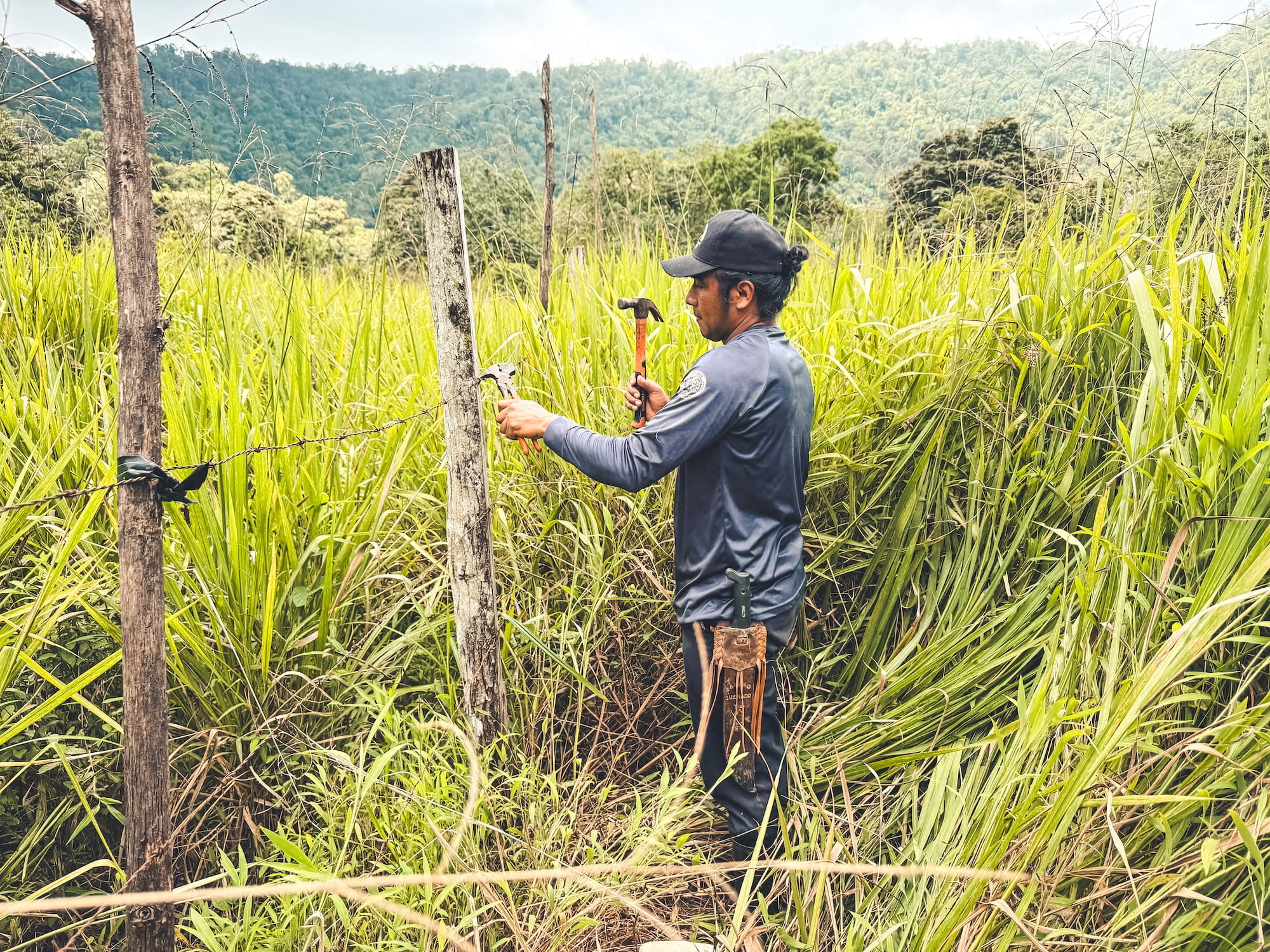
The single most impactful thing you can do on day one costs almost nothing: take down the barbed wire.
Most rural properties in Costa Rica are crisscrossed with old cattle fencing, a legacy of decades of agricultural use. These fences are invisible barriers to the wildlife you've just committed to protecting. Peccaries, tapirs, ocelots, pumas, deer, and hundreds of smaller mammals are blocked or injured trying to cross them. In the context of a biological corridor property in Costa Rica, fences are the enemy of connectivity.
What to do:
- Prioritize removing fences in areas adjacent to existing forest, rivers, or neighboring reserves these are the natural movement corridors.
- Where a fence along a road or property boundary must remain for legal or safety reasons, install wildlife-friendly alternatives: wire-free wooden post markers, or gap the lower portion of the fence to allow passage of smaller animals.
- Coordinate with neighboring landowners. One removed fence is helpful; a kilometer of connected open land is transformational.
Costa Rica has prioritized creating wildlife corridors that connect national parks, reserves, and private lands. Wide-ranging animals like jaguars and pumas need space to move and find mates. Your property could be the missing link in a local corridor that makes this possible.
2. Deploy a camera trap network: Know what lives on your land
Before you can protect your land, you need to understand it. Camera traps, motion-activated cameras placed at strategic locations across the property, are the most powerful tool available to a private landowner for wildlife monitoring.
These devices work 24 hours a day, in any weather, and capture species you would never see during a normal walk. Many of Costa Rica's most charismatic animals like jaguars, tapirs, pumas or ocelots are primarily nocturnal and are almost impossible to observe directly. A well-placed camera trap changes everything.
How to set up your camera trap system:
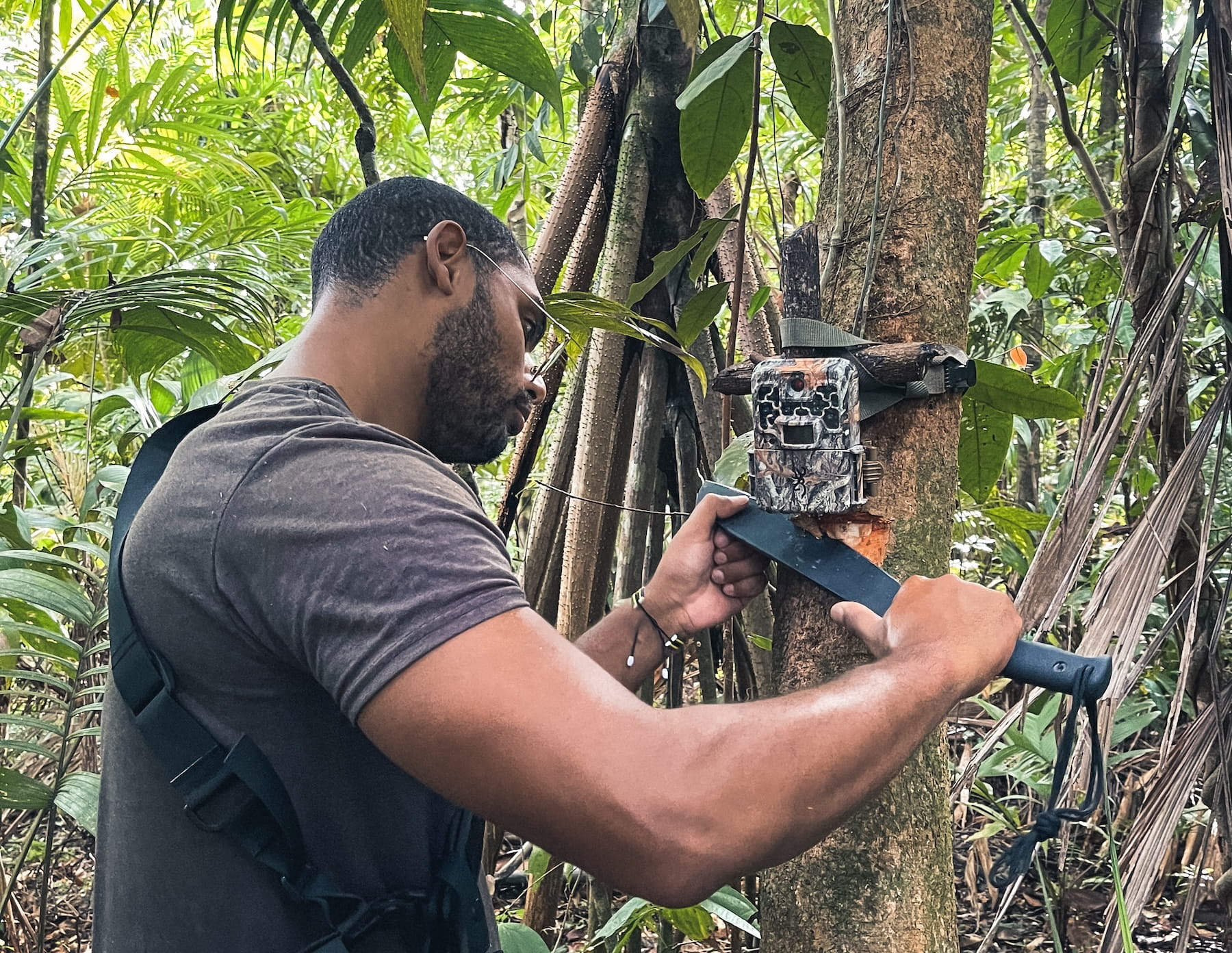
- Start with 5 to 10 cameras for a property of 50+ hectares. Place them along animal trails, river banks, salt licks, and forest edges, areas where animals naturally concentrate.
- Use cameras with infrared night vision and no visible flash. Flash-based cameras can disrupt animal behavior and attract theft.
- Don’t place your cameras too high! Knee height is the sweet spot for detecting mammals in Costa Rica
- Check and replace SD cards monthly. Log all sightings in a simple spreadsheet: date, time, species, location. This creates your biodiversity baseline.
- Share your data with platforms like iNaturalist which use AI to help identify species from trap images. This connects your data to the global scientific community.
- When you get a big cat on camera, celebrate it and share it. Landowners who see apex predators on their property often become the most committed conservationists in their region.
- If your cameras capture a jaguar, share that discovery immediately with regional conservation and tracking organizations such as Las Oncas, which monitors jaguar populations across Costa Rica's South Pacific. Your single image could fill a critical gap in their distribution maps and directly inform protection efforts across the entire corridor.
Buy Wild clients can take this a step further. Our land monitoring service handles everything from camera trap placement to quarterly wildlife reports giving you professional biodiversity tracking on your property without having to manage it yourself. Your land, watched over, every day.
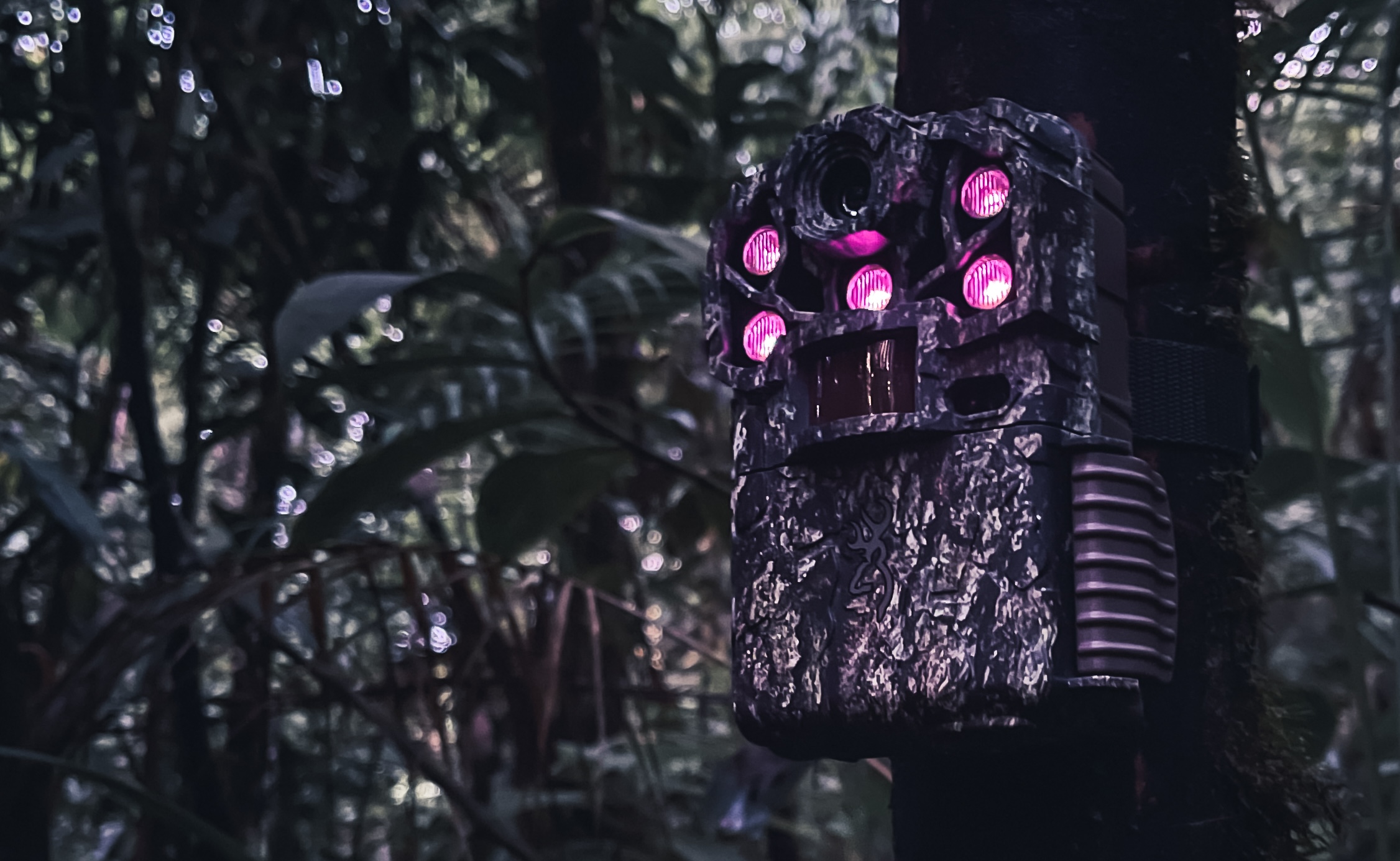
Camera trap pro tip: At Las Oncas we use the Browning Spec Ops Elite HP5 Ultra
3. Reforest the pastures: Let the forest come back
Many conservation properties in Costa Rica were cattle farms in a previous life. The forest was cleared for pasture, the soil compacted by cattle, the biodiversity reduced to a handful of grass species. Reforestation is how you begin to reverse that damage and it is one of the most rewarding acts a landowner can undertake.
Costa Rica has proven that forest recovery is possible at scale: forest cover went from roughly 20% in the 1980s to over 50% today, driven largely by the combination of private landowner commitment and government support programs. You are joining that legacy.
Your reforestation strategy:
- Map your land use: identify which pasture areas you actually need for future construction, access roads, or gardens and dedicate everything else to reforestation.
- Always plant native species. Native plants have co-evolved with local wildlife for millennia they provide the exact food, shelter, and conditions Costa Rica's species depend on. They're also hardy, low-maintenance, and adapted to local soils. Non-native species, by contrast, can outcompete locals and disrupt the ecological relationships that keep a forest alive. Plant native: it's the only way your restored land truly belongs to the ecosystem.
- Start with pioneer species: fast-growing native trees to create canopy cover quickly, stabilize soil, and create the conditions for slower-growing climax species to establish underneath.
- Interplant with wildlife-attracting species: fruit trees create food resources for birds and mammals.
- Connect your reforestation to existing forest patches on or near your property. Even a narrow tree corridor of 50 to 100 meters can allow bird and seed dispersal across gaps that currently block forest expansion.
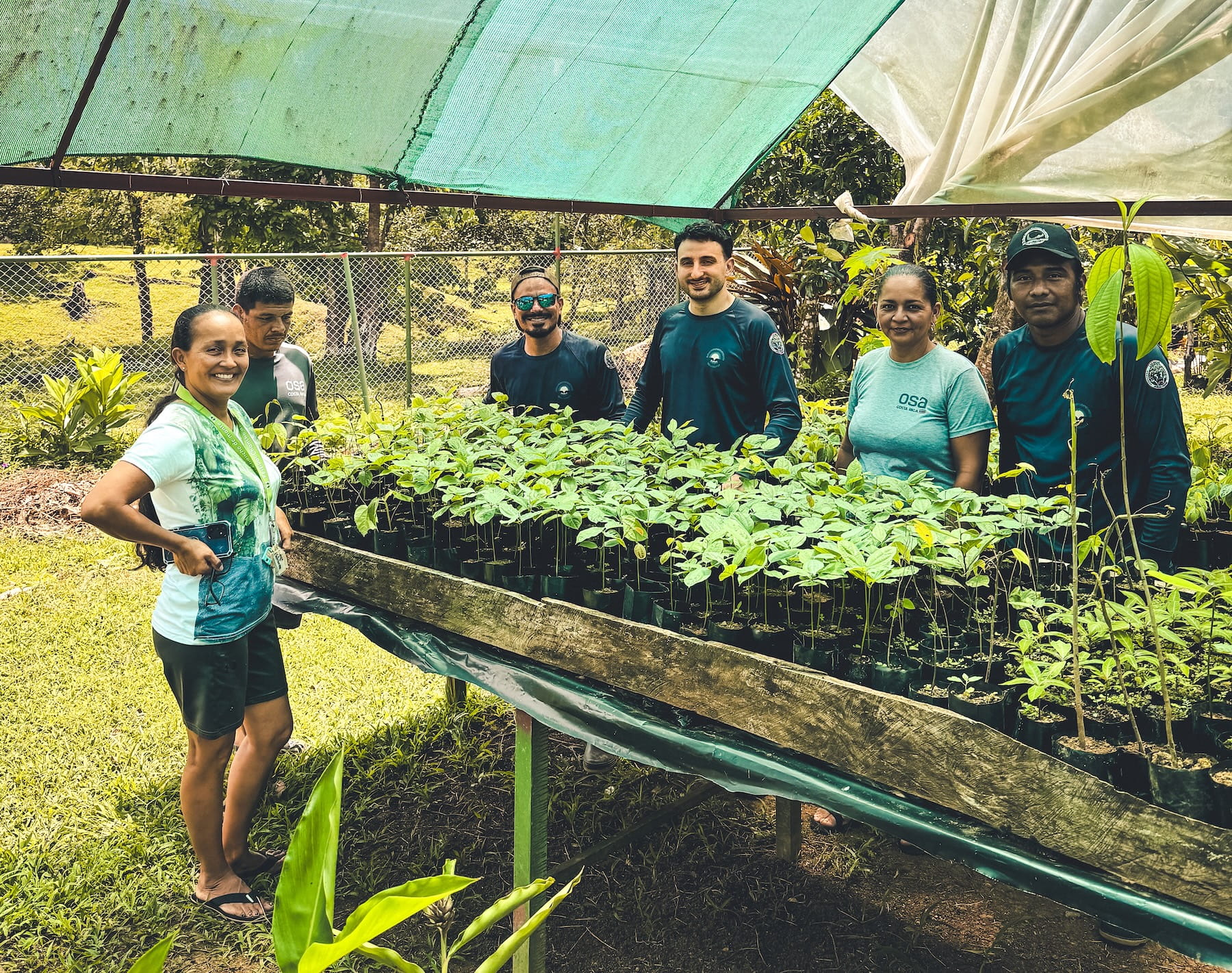
- Partner with a local nursery or NGO. Many organizations in Costa Rica grow native seedlings and can supply you at low cost.
If your property in located in Costa Rica’s South Pacific area, Buy Wild offers a dedicated reforestation program to help you restore your land with the right native species, the right partners, and the right plan for your region.
4. Hire a local ranger: The land needs eyes on the ground
A piece of remote land without regular human presence is vulnerable to illegal logging, poaching, gold mining, or simply gradual encroachment. A local ranger, ideally from a nearby community with deep knowledge of the land and its wildlife, is your most important long-term investment.
What a good ranger does:
- Patrols the property perimeter and interior regularly, maintaining trails and reporting any incursions or signs of poaching.
- Collects and logs camera trap SD cards on a regular schedule.
- Maintains reforestation plots: watering, weeding invasive grasses, replacing failed seedlings.
- Acts as a local ambassador, someone rooted in the community who can help maintain good relationships with neighboring landowners, a critical factor in expanding your conservation impact.
- Reports directly to you with regular photo updates: the best rangers become your eyes, ears, and connection to the land even when you are not present.
Hiring locally is always preferred. A ranger who grew up near your land has ecological knowledge no textbook can teach and their employment is a direct economic benefit to the community that surrounds your reserve.
Need a trusted ranger to look after your land? Through our deep roots in local communities across every region we work in, Buy Wild connects you with experienced, passionate caretakers who know the forest and will treat your property as their own.
5. Register for the PES program: Get paid to protect
Costa Rica operates one of the world's most recognized Payments for Environmental Services (PES) programs, administered by FONAFIFO (the National Forest Finance Fund). If your land contains or will contain forest cover, you may be eligible to receive government payments simply for protecting and maintaining that forest.
The program has benefited more than 7,000 landowners and has been directly credited with helping Costa Rica recover from a catastrophic deforestation crisis in the 1980s. For foreign landowners committed to biodiversity investment in Costa Rica, this program is both a financial tool and a formal recognition of your land's conservation value.
How to participate:
- Contact FONAFIFO directly or work with a local environmental lawyer to assess your property's eligibility. Payments are made for forest conservation, reforestation, and natural regeneration.
- Contracts are typically established for 5, 10, or 20-year periods and require a basic management plan but the program also allocates a portion of payments to help you develop that plan.
- PES payments provide a direct financial offset against your maintenance costs. For reforestation programs, payments have ranged from $22 to $64 per hectare per year, with additional incentives for lands in or adjacent to biological corridors.
For more information about PES and FONAFIFO, read our article about the PES program.
Additional actions: Going further
Beyond the core six steps, here are additional actions that deepen your conservation impact:
- Install bioacoustic monitors. These devices record bird, frog, and bat calls around the clock, providing a rich dataset for species identification that complements your camera traps.
- Control non native invasive species that can prevent forest regeneration. Manual or targeted removal in key areas can speeds up natural recovery.
- Connect with your neighbors. Building relationships with neighboring landowners creates the possibility of coordinated corridor management, turning adjacent private properties into a single, connected ecosystem.
Your land is already part of something bigger
When you buy land for conservation in Costa Rica, you are not just purchasing hectares. You are making yourself part of one of the most remarkable ecological recovery stories on Earth: a country that reversed catastrophic deforestation through the combined effort of government, science, and private landowners who chose to act.
Your property, once a cattle ranch, can become a functioning link in a biological corridor.
Your pastures, once grazed bare, can return to rainforest within a decade. Your camera traps can photograph a jaguar that has not been seen in this valley for twenty years. These are not fantasies, they are documented realities, happening on private reserves across Costa Rica right now.
The first year after purchase is the most important. The actions you take (or don't take) in those twelve months set the trajectory for everything that follows. Start with the fences. Deploy the cameras. Plant the first trees. Hire the ranger.
The forest will do the rest.
Looking for the right conservation land in Costa Rica?
At Buy Wild, we specialize in connecting conservation-minded buyers with large properties in Costa Rica's most biodiverse region: the Osa Peninsula. Home to Corcovado National Park and some of the last intact lowland rainforest in Central America, this is where your conservation vision can have its greatest impact. We don't just sell land: we help you understand what you're buying, what it can become, and how to make it happen.