
For anyone exploring Costa Rica real estate beach opportunities, one of the most important things to understand is how beachfront land is regulated. Unlike many other countries, Costa Rica has very specific laws that govern the stretch of land where the ocean meets the shore. These rules are designed to protect the coastline for the public and ensure sustainable use of one of the country’s most valuable assets: its beaches.
The key legislation you need to know is the Maritime Land Zone Law (Law 6043), which defines the boundaries of what is known locally as the Zona Marítima Terrestre (ZMT). This area extends 200 meters inland from the average high tide line, and it is legally considered national territory owned by the State. Because of this, beachfront property in Costa Rica is not always the same as “owning” the sand in front of your home.
How the Maritime Zone Works
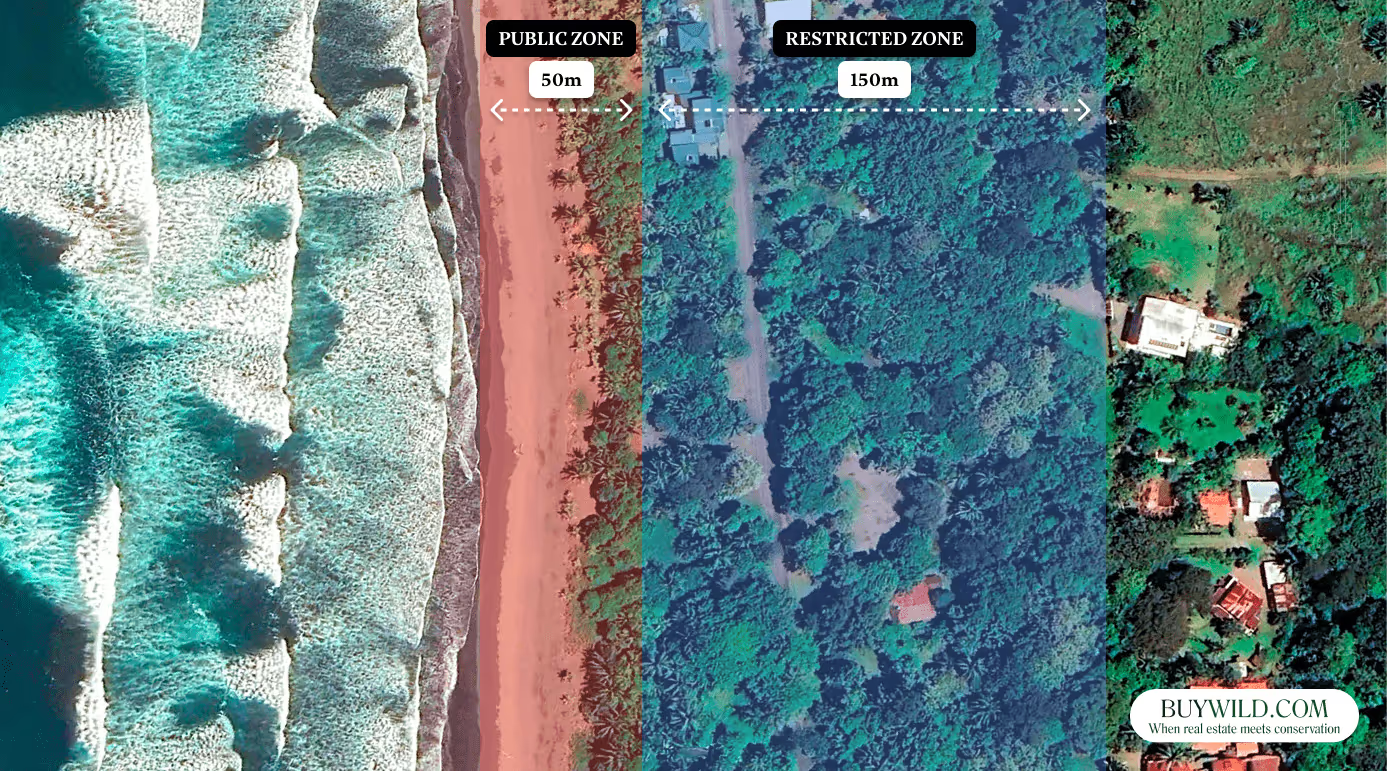
The 200-meter maritime zone is divided into two distinct sections:
1. The public zone (First 50 meters)
The first strip of land, 50 meters from the high tide line, is completely public. No one can buy it, build on it, or claim it as private property. This guarantees free access for everyone, whether local residents, tourists, or surfers heading out to catch a wave.
2. The restricted zone (Next 150 meters)
Behind the public strip lies the restricted zone, which stretches another 150 meters inland. This is where things get more flexible. While the State technically owns this area as well, individuals and companies can apply for a concession, essentially a long-term lease, to legally use and develop the land. Concessions can last for years and are renewable, making them the main way foreigners invest in Costa Rica beachfront properties.
Can you own beachfront real estate in Costa Rica?
In most cases, you cannot hold a private title inside the maritime zone. However, there are rare exceptions. Certain properties that were titled before March 2nd 1977, when the maritime law was enacted, remain valid, meaning that some privately titled beachfront property in Costa Rica does exist. These are exceptions rather than the rule and are typically some of the most sought-after and valuable pieces of real estate in the country.
Key takeaway
If you’re researching Costa Rica real estate beach options, understanding the maritime land zone is essential before making any purchase. While direct ownership of beachfront land is limited, concession agreements make it possible to lease and enjoy a prime location just steps from the ocean. And in rare cases, you may even find a legally titled beachfront property available.
Costa Rica’s legal framework ensures that its beaches remain accessible to the public while still allowing for responsible development. For investors, retirees, or anyone dreaming of a home by the sea, knowing these rules will help you navigate opportunities and make informed decisions about buying beachfront property in Costa Rica.